
Choosing the right Roto Moulding Machine can shape product quality, production speed, and long-term operating costs. The decision deserves more than a comparison of brochures. A machine may look powerful on paper, yet struggle with uneven heating, slow cooling, or awkward mould changes.
Dr. Robert J. Crawford, a respected authority on rotational moulding, has said, “Rotational moulding is simple in principle, but demanding in practice.” That observation remains useful when evaluating equipment. The machine must match the polymer, mould size, wall thickness, product shape, and expected production volume. Oven temperature stability matters. So do arm movement, cooling control, loading space, automation, and maintenance access. Small design details can affect every cycle.
This guide presents 10 practical tips for selecting a suitable Roto Moulding Machine. It considers capacity, energy use, safety systems, control accuracy, service support, and total ownership cost. A cheaper machine may become expensive when downtime increases. A highly automated model may also exceed the needs of a smaller factory. There is no perfect machine. Details matter.
Buyers should inspect real operating conditions, not only promised specifications. Ask to see a complete cycle, including heating, rotation, cooling, and mould removal. Check the temperature records. Listen for unusual vibration. Review spare-parts availability and technician response times. One assumption often fails: faster production is not always better production. Careful selection reduces waste, but experience still has limits. This guide offers a strong starting point, while the final decision requires practical testing and honest reflection.
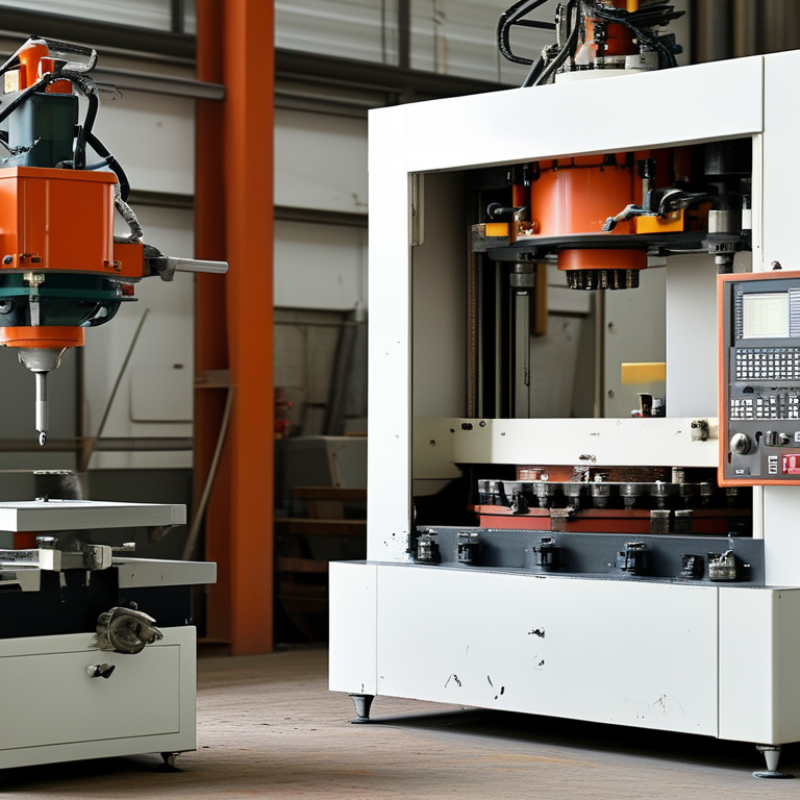
Choosing the right roto moulding machine starts with understanding its work, not its advertised size.
Rotational moulding heats polymer powder inside a rotating mould, creating hollow products with fairly even walls. Common applications include water tanks, agricultural containers, pallets, playground parts, medical housings, and automotive components.
Market demand supports this range. Grand View Research estimated the global rotational moulding market at about USD 5.1 billion in 2023, with growth expected through 2030.
Mordor Intelligence also forecasts continued expansion, although its market values differ because research methods and product categories vary.
That disagreement deserves attention. Reports are useful, but not perfect.
Match the machine to mould dimensions, product weight, heating method, cooling control, and expected output.
Check arm movement and chamber clearance carefully. Capacity matters. Measure twice.
A large machine may waste energy when producing small containers, while a small unit can restrict future growth.
Compare cycle time, temperature uniformity, loading access, and maintenance requirements. Review power consumption under real production conditions, not only catalogue figures. Ask for evidence from similar moulding cycles.
Automation can improve repeatability, but it also increases control-system complexity. The best choice depends on material, wall thickness, annual volume, and factory layout.
An experienced operator should inspect sample parts for warpage, trapped air, uneven walls, and surface defects before approval.
Price alone is a weak decision rule.
Defining Product Requirements Before Choosing a Machine
Before comparing roto moulding machines, define the product in measurable terms. The machine should fit the product, not the other way around. Record length, width, height, weight, wall thickness, and acceptable tolerances. Include inserts, threaded areas, sharp corners, and textured surfaces. These details affect mould design, heating time, cooling space, and demoulding access.
Material selection also matters. Different polymers require different processing temperatures and cycle controls. Note the expected resin type, loading weight, colour changes, and powder flow behaviour. For large tanks, check oven capacity and arm clearance carefully. For small parts, multi-arm production may improve output. Calculate the required daily volume, but leave space for maintenance and mould changes. A crowded schedule can reduce real production capacity.
Do not choose a machine from catalogue dimensions alone. Measure the largest mould, including its frame and opening path. Ask for trial data, temperature records, and cycle repeatability. In practical production, the first capacity estimate is often wrong. I have seen projects overlook cooling time, then miss delivery targets. That mistake is expensive, but useful to examine. Build a simple test plan with sample parts, weight checks, wall-thickness readings, and visual inspections. Requirements may change after the first trial. That is normal. Keep the changes documented before final machine selection.
| Tip | Product Requirement | Typical Data to Define | How It Affects Machine Selection | Practical Check Before Purchase |
|---|---|---|---|---|
| 1 | Product Dimensions |
Maximum length, width, height, diameter, and mold envelope. Small: below 600 mm Large: above 1,500 mm |
The mold must fit inside the oven, cooling area, and loading zone with sufficient clearance. Larger products generally require a larger machine envelope and stronger structural components. | Compare the product envelope with the usable oven dimensions, arm clearance, mold loading space, and maximum mold diameter specified by the machine supplier. |
| 2 | Product Weight and Wall Thickness |
Finished part weight, target wall thickness, thickness tolerance, and resin loading weight. Common polyethylene rotational-moulded wall thickness: approximately 3–12 mm. |
Heavier molds and higher resin charges require adequate arm capacity, mold mounting strength, and drive-torque capacity. Wall thickness also influences heating and cooling time. | Calculate the maximum combined weight of the mold, resin, inserts, and fixtures. Confirm that the machine's rated load exceeds this value with a suitable safety margin. |
| 3 | Material and Powder Characteristics |
Polymer type, powder bulk density, particle size, melt temperature, moisture sensitivity, and required additives. Typical materials include polyethylene, polypropylene, polyamide, and PVC compounds. |
Material choice affects oven temperature, heating profile, cooling requirements, mold release behavior, and contamination-control needs. Most common polyethylene compounds process at higher temperatures than PVC compounds. | Provide the material technical data sheet and processing window. Verify compatibility with the oven temperature range, powder charging method, and cleaning procedure. |
| 4 | Required Production Rate |
Target parts per hour, operating hours per shift, working days per year, and expected utilization. A complete cycle may include loading, heating, cooling, unloading, and inspection. |
Production volume determines the number of arms, mold stations, oven size, cooling capacity, and automation level. A machine should be sized for actual output rather than only peak demand. | Estimate annual demand using realistic uptime. Include planned maintenance, mold changes, cleaning, quality checks, and downtime when calculating the required cycle capacity. |
| 5 | Heating Method and Temperature Control |
Required peak temperature, heating uniformity, heat-up time, and allowable temperature variation. Many thermoplastic processes require oven temperatures roughly between 200°C and 350°C, depending on the material and cycle. |
Direct-gas, electric, or hybrid heating systems have different installation, operating, and maintenance requirements. Precise temperature control is important for avoiding thin walls, bubbles, degradation, and incomplete fusion. | Ask for measured temperature-uniformity data, burner or heater control details, thermocouple locations, ventilation requirements, and the available process-control functions. |
| 6 | Cooling System Requirements |
Cooling medium, cooling time, permissible shrinkage, part distortion limits, and required surface quality. Common methods include forced air, water mist, or combined air-and-water cooling. |
Cooling capacity directly affects cycle time and dimensional stability. Excessive water or uneven cooling can cause warpage, residual stress, and surface defects. | Confirm airflow volume, fan capacity, spray control, cooling-zone layout, water quality requirements, drainage, and the ability to control cooling by product recipe. |
| 7 | Mold Type, Material, and Changeover |
Mold material, mold weight, split-line design, inserts, venting, number of molds, and changeover frequency. Aluminum molds are widely used because they provide good heat transfer and can be manufactured in complex shapes. |
Mold weight and mounting arrangement influence arm load, rotation speed, fixture design, and changeover time. Frequent changes favor quick-clamping systems and accessible mold stations. | Test the largest and heaviest mold. Check fixture compatibility, bolt patterns, arm access, mold balancing, vent placement, and the time required for a complete changeover. |
| 8 | Part Complexity and Inserts | Number and type of inserts, threaded features, undercuts, ribs, handles, internal cavities, foam cores, and molded-in hardware. | Complex parts may require controlled biaxial rotation, adjustable rotation speed, programmable dwell periods, insert supports, and specialized mold fixtures to achieve uniform coverage. | Review a sample mold and a complete loading sequence. Confirm that inserts remain correctly positioned and that the machine can achieve consistent material distribution in difficult areas. |
| 9 | Automation and Process Monitoring | Required level of manual operation, recipe storage, automatic arm movement, temperature logging, cycle alarms, data export, and quality traceability. | Automated controls improve repeatability and reduce operator dependence. More advanced monitoring may be justified for safety-critical, food-contact, or highly dimensional products. | Verify the control system's ability to store product recipes, record actual temperatures and cycle times, manage alarms, restrict unauthorized changes, and export production data. |
| 10 | Factory Utilities, Safety, and Future Capacity | Available floor space, electrical supply, fuel or gas supply, compressed air, ventilation, cooling water, exhaust, operator access, and planned product growth. | Utility limitations can prevent a machine from reaching its rated performance. Future capacity requirements may justify additional arms, a larger oven, modular automation, or higher allowable mold loads. | Complete a site survey covering floor loading, access doors, foundation requirements, extraction, fire protection, emergency stops, guarding, noise, utility consumption, and expansion space. |
Machine type directly affects output, labor, and product consistency. Carousel machines suit high-volume production with several stations. Shuttle machines offer flexible loading and easier mold changes. Rock-and-roll systems fit long, narrow products, but their output can be limited.
Grand View Research’s 2024 market analysis projects steady growth for rotational moulding equipment, with efficiency and automation driving demand.
Tip 1: Match the machine to your product range. Tip 2: Compare arm length, oven size, and mold clearance. Tip 3: Check whether the machine supports independent arm control.
This feature can reduce idle time between cycles. Capacity matters beyond oven volume. A larger chamber may waste energy when producing small tanks. Measure actual mold loading, not advertised maximum capacity.
Tip 4: Request cycle-time data using your resin and mold.
Tip 5: Examine heating uniformity and cooling control.
The Association of Rotational Molders identifies process control as a major factor in wall-thickness consistency.
Tip 6: Calculate output per shift, including loading and unloading time. Tip 7: Ask for energy use per finished part.
The U.S. Department of Energy reports that better motor control can reduce energy consumption in suitable industrial applications.
The saving may be smaller in real plants. That is worth checking.
Tip 8: Inspect automation and safety systems.
Tip 9: Compare maintenance access, spare-part availability, and technician training.
A cheaper machine can become expensive after repeated downtime.
Tip 10: Test a representative mold before purchase.
My practical concern is simple: impressive demonstrations may hide difficult changeovers and unstable cooling.
Start with measured energy data, not sales estimates. Record oven temperature, cycle time, burner input, and cooling duration.
The U.S. Department of Energy reports that compressed-air leaks can waste 20–30% of compressor output. Therefore, inspect air lines, valves, and pressure settings before comparing machines.
Choose insulated ovens, efficient burners, variable-speed drives, and heat recovery where practical. These details can reduce wasted heat, although actual savings depend on mold size and production volume.
Automation should control repeatable tasks, not hide poor process decisions. Look for recipe storage, automatic arm movement, temperature logging, and alarms for abnormal cycles.
Data logging helps operators find uneven heating or unnecessary cooling. Keep the interface simple. A complicated screen may slow production during a fault.
Personally, I would not trust automation without manual override and accessible sensor calibration. That may seem old-fashioned.
Safety deserves direct inspection. Verify guarding, door interlocks, emergency stops, hot-surface protection, and safe access around rotating arms.
ISO 12100 and ISO 13849 offer useful frameworks for risk assessment and control systems. Maintenance access matters equally.
Check burner access, gearbox lubrication points, filter replacement space, and spare-part availability. A 2023 U.S. Department of Energy maintenance guide links preventive maintenance with improved equipment reliability, but schedules still need adjustment after real operating data.
Ask for service records, alarm histories, and documented training.
Test the machine under production conditions. Empty demonstrations can look perfect.
Choosing a roto moulding machine is not only a capacity decision. Supplier support can decide whether production stays stable after installation. Ask how quickly technicians respond, where spare parts are stored, and whether remote diagnosis is available. Request a clear commissioning plan, operator training, maintenance schedule, and written service terms. A supplier should explain problems in practical language, not hide behind technical phrases.
Study the total cost before comparing machine prices. Include electricity use, cooling water, mold changes, labor, software updates, freight, installation, and yearly maintenance. A low purchase price may become expensive if cycle control is poor. Ask for energy data from a similar production setup. Check the warranty carefully. My first estimate was too optimistic because I ignored floor preparation and crane access.
Future expansion needs equal attention. Leave enough space for another arm, larger molds, extra cooling equipment, and safe material movement. Confirm whether the control system can support additional stations later. Discuss different mold sizes and product weights with the supplier. A machine that handles today’s orders may limit tomorrow’s growth. Visit an operating site if possible, and speak with the production team. Their comments often reveal small delays that brochures never mention. You may not need maximum capacity now. Plan for realistic growth, not an impressive number.
Record length, width, height, weight, wall thickness, and acceptable tolerances. Include inserts, threaded areas, sharp corners, and textured surfaces.
Different polymers need different processing temperatures and cycle controls. Also record resin loading, colour changes, and powder flow behaviour.
Measure the complete mould, including its frame and opening path. For large tanks, check oven capacity and arm clearance carefully.
Calculate the required daily output, then reserve time for maintenance and mould changes. A crowded schedule can reduce actual capacity.
Ask for temperature records, cycle repeatability, and sample-part results. Check weight, wall thickness, and surface appearance. Empty demonstrations can look perfect.
Record oven temperature, cycle time, burner input, and cooling duration. Inspect air lines, valves, and pressure settings for leaks.
Useful features include recipe storage, automatic arm movement, temperature logging, and abnormal-cycle alarms. Keep manual override available. Simple screens help.
Verify guarding, door interlocks, emergency stops, hot-surface protection, and safe access around rotating arms. Check lubrication points, filters, burner access, and spare parts.
Test under real production conditions, not only with an empty machine. The first capacity estimate may be wrong, especially when cooling time is overlooked. That mistake is useful to examine.
Choosing the right Roto Moulding Machine begins with understanding how the equipment works and which products it will manufacture. Before comparing options, define the required product size, shape, material, wall thickness, output volume, and quality standards. These details will help determine the most suitable machine type, mould capacity, heating and cooling performance, cycle time, and production flexibility. A clear product plan also prevents the purchase of equipment that is either too limited or unnecessarily large.
It is equally important to evaluate energy efficiency, automation features, operator safety, ease of maintenance, and access to replacement parts. A machine with reliable controls and practical maintenance procedures can improve productivity and reduce long-term interruptions. When assessing suppliers, consider technical training, installation assistance, warranty terms, response time, and total ownership cost rather than focusing only on the initial price. Finally, select a solution that can support future moulds, increased production, and possible process upgrades as your business develops.
