What Is a Rotomolding Mold and How Does It Work?

Time:2026-10-24 Author:Mason
0%

What Is a Rotomolding Mold and How Does It Work?

A Rotomolding Mold is the shaped tool that gives plastic products their final form. It can create tanks, kayaks, playground parts, medical containers, and protective housings. Unlike injection molds, it usually works with low internal pressure. That difference affects its construction, cost, and maintenance.

Rotational molding consultant Glenn Beall has described the mold as “the heart of the rotational molding process.” His point is practical. The mold controls wall thickness, surface detail, part strength, and dimensional consistency. During production, powdered plastic enters the hollow mold. The mold then rotates slowly on two axes inside a heated oven. The powder melts, coats the interior surface, and gradually forms a seamless shell. After heating, the mold moves into a cooling area. Air or water removes heat carefully, preventing serious distortion.

Small details matter. A sharp corner can trap material. A weak vent can cause pressure problems. Poor cooling may leave the part warped. These issues are not always obvious during the first trial. That is where practical experience becomes valuable.

Molds may use cast aluminum, fabricated steel, or other specialized materials. Each option offers different results. Aluminum transfers heat efficiently, while steel can support durable, repeat production. However, no mold is perfect. Designers still balance weight, cost, cycle time, texture, and repair needs. Understanding these compromises makes it easier to choose the right Rotomolding Molds for a reliable manufacturing process.
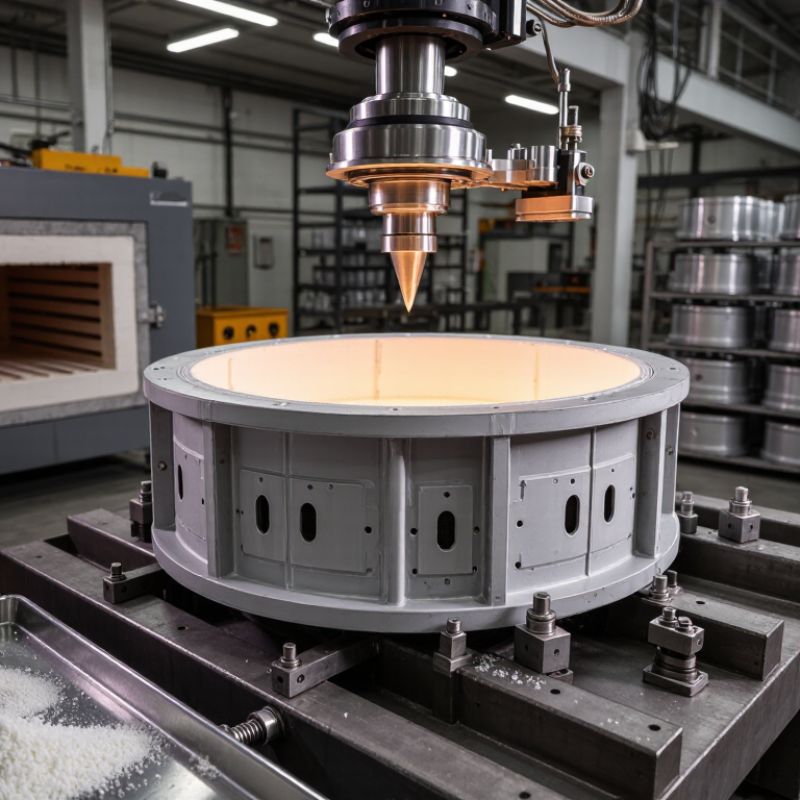
What Is a Rotomolding Mold and How Does It Work?

Definition and Core Purpose of a Rotomolding Mold

A rotomolding mold is a hollow tool that shapes plastic parts through controlled heat and rotation. Its core purpose is simple: hold polymer powder in the correct form while it coats the inner surface evenly. The mold usually includes a cavity, clamps, vents, and a parting line for safe removal. During production, operators load measured powder, close the mold, and place it inside a heating chamber. Rotation moves the mold on two axes. As the powder melts, it follows the mold walls and forms a hollow product.

In practical work, mold design affects more than appearance. Sharp corners can create thin areas or trapped air. Smooth radii support better material flow. Wall thickness also depends on powder quantity, heating time, and rotation speed. Small vents help release air without damaging the surface. Steel molds often suit repeated production, while lighter tools can support shorter development runs. A perfect mold is difficult to achieve. Trial parts may reveal warping, uneven thickness, or difficult demolding. These results should guide measured adjustments, not rushed changes.

Tips: Inspect the mold before every cycle. Check clamps, vents, seams, and interior cleanliness. Keep powder weight consistent during testing. Record heating time and part quality together. This simple habit improves repeatability. Do not ignore minor surface defects; they may indicate deeper process variation.

Key Components and Materials Used in Rotomolding Molds

A rotomolding mold is a hollow tool that forms plastic parts through controlled heat and rotation. Its structure directly affects wall thickness, surface quality, and dimensional accuracy. The mold usually contains two or more sections joined by clamps, bolts, or quick-lock fixtures. These connections must stay tight during heating and rotation. Small vent tubes allow trapped air and gases to escape. Without proper venting, bubbles, weak spots, or deformation may appear. That detail is easy to underestimate.

Mold materials commonly include aluminum, steel, or engineered alloys. Cast aluminum heats quickly and supports detailed cavity shapes. It also transfers heat fairly evenly, which helps produce consistent walls. Fabricated steel offers strength for large or heavy molds, although it may heat more slowly. CNC-machined aluminum provides accurate dimensions and clean edges. Surface finish matters too. A polished cavity can create a smoother part. A textured cavity can improve grip or hide minor marks. Both options can work, depending on the product.

Some molds include threaded inserts, ribs, handles, or cooling channels. These features need secure anchoring and enough surrounding material. They must tolerate repeated heating, cooling, and mechanical movement. In practice, insert placement is sometimes treated as a minor detail. It should not be. During production, polymer powder coats the inner cavity as the mold rotates. Heat then fuses the powder into a hollow form. Experienced operators inspect vents, seams, and wear regularly. Still, no mold remains perfect forever. Thermal expansion, weld distortion, and small surface damage can gradually change results. Regular inspection helps reveal those changes early.

What Is a Rotomolding Mold and How Does It Work? - Key Components and Materials Used in Rotomolding Molds

Category Mold Component or Material Primary Function Common Material or Specification Important Characteristics
Mold Structure Mold cavity Defines the external shape, surface texture, and dimensions of the molded part. Fabricated sheet metal, cast aluminum, or machined aluminum Must withstand repeated heating and cooling while maintaining the required geometry.
Mold Structure Mold halves and parting line Allow the mold to open for part removal and close securely during heating. Bolted or clamped metal sections with heat-resistant seals where required Accurate alignment helps reduce flash and unwanted material leakage.
Mold Structure Clamps, hinges, and fasteners Hold mold sections together and support repeated opening and closing. Heat-resistant steel hardware Should remain secure under thermal cycling and machine movement.
Mold Structure Flange and reinforcement frame Improves stiffness and helps maintain the mold shape during processing. Steel or aluminum structural members Useful for larger molds that could distort under heat or handling loads.
Machine Interface Mounting plate and arm connection Connects the mold to the rotating arm of the molding machine. Steel or aluminum mounting hardware Must tolerate rotation, vibration, and the weight of the mold and polymer charge.
Ventilation Vent tube or breather vent Allows air and process gases to move in and out while limiting polymer loss. Porous sintered metal, fiberglass, or heat-resistant vent assemblies Vent placement and permeability influence internal pressure and wall quality.
Part Removal Ejector or demolding features Assist removal of parts with deep cavities, undercuts, or tight areas. Mechanical ejectors, removable inserts, or designed draft angles The design should minimize part damage and reduce demolding time.
Surface Treatment Mold release system Reduces adhesion between the polymer and mold surface. Approved semi-permanent release coating or compatible release agent The selected system must be compatible with the polymer and operating temperature.
Mold Material Sheet steel Provides a durable mold option for many production applications. Welded and formed steel sheet Strong and economical, but weld quality and thermal distortion must be controlled.
Mold Material Cast aluminum Forms complex cavities and supports repeatable production. Aluminum casting alloy Offers good thermal conductivity and can reproduce detailed surfaces.
Mold Material Machined aluminum Provides precise cavity geometry for prototypes and selected production runs. CNC-machined aluminum block or plates High dimensional accuracy, though material and machining costs can be higher.
Process Principle Biaxial rotation Distributes the heated polymer over the inside surface of the mold. Rotation about two perpendicular axes The polymer generally forms a hollow part without injection pressure.
Process Principle Heating, cooling, and demolding cycle Melts the polymer, solidifies the wall, and enables part removal. Controlled oven heating followed by air or water-assisted cooling Cycle time depends on part thickness, polymer type, mold design, and cooling conditions.
Typical Polymer Polyethylene powder Melts and coats the mold interior to create the finished wall. Rotomolding-grade polyethylene, including linear low-density polyethylene Selected for impact resistance, processability, and broad application suitability.

Note: Actual mold construction, wall thickness, vent design, and cycle settings vary according to part geometry, polymer grade, production volume, and required surface finish.

How a Rotomolding Mold Supports the Production Process

What Is a Rotomolding Mold and How Does It Work?

A rotomolding mold supports production by shaping plastic during controlled heating and rotation. The mold usually consists of aluminum or steel. Its internal surface defines the final part’s dimensions, texture, and wall appearance. During production, measured polymer powder enters the mold. The mold rotates on two axes inside a heated chamber. The powder melts gradually and coats the cavity evenly. Cooling then solidifies the hollow component.

Mold design directly affects repeatability. Rounded corners help material flow and reduce thin spots. Proper venting prevents trapped air from distorting the part. Reinforced areas may use ribs, inserts, or carefully shaped cavities.

According to Fortune Business Insights’ 2024 rotational molding market assessment, the global market was valued at about USD 5.6 billion in 2024.

This growth reflects demand for durable, lightweight, hollow products across several industrial applications.

Experienced operators still inspect every mold carefully. They check parting lines, hinges, vents, and surface wear before production begins. A small scratch can transfer onto hundreds of parts.

Mold temperature and rotation speed also require adjustment for each polymer and geometry. The Association of Rotational Molders notes that cycle conditions strongly influence wall uniformity and part quality.

Some designs look efficient on paper. They may still cool unevenly in practice. That uncomfortable gap deserves testing, not assumptions.

Step-by-Step Rotational Molding Operation

A rotomolding mold is a hollow tool that shapes plastic through heat and rotation. It is usually made from aluminum or steel. The cavity contains the final product’s negative form. Its surface quality directly affects the tank, bin, or enclosure’s appearance. Grand View Research’s 2024 rotational molding report estimated that polyethylene held more than 80% of resin demand. That explains why many molds are designed for powder-based polyethylene processing.

The operation starts with measuring plastic powder into the mold. The operator then closes and locks the mold carefully. The mold enters a heated oven and rotates on two axes. As the powder melts, it coats the inner wall evenly. Rotation continues during heating and prevents heavy material buildup. Temperature probes and cycle records help control the process. The Association of Rotational Molders identifies heating, cooling, and material distribution as key quality variables.

After heating, the mold moves into a cooling station. Air or a controlled water mist removes heat gradually. The mold keeps rotating during cooling, or the part may deform. Once the surface feels stable, workers open the mold and release the product. Trimming removes the flash around the parting line. Vent holes also need inspection. Small errors matter. A 2023 market analysis by Allied Market Research reported growing demand for lightweight, durable molded products, but production is not automatically efficient. In shop-floor practice, uneven cooling remains a frequent problem. The cycle may look simple, yet operators often need repeated testing before wall thickness becomes reliable.

Mold Design Factors, Benefits, and Common Applications

A rotomolding mold is a hollow tool that shapes plastic through controlled heating and rotation. During production, powdered resin enters the mold before it closes. The mold rotates slowly inside an oven, allowing melted plastic to coat its inner walls. After cooling, the finished part keeps the mold’s shape.

Mold design strongly affects quality, cost, and cycle time. Aluminum molds transfer heat quickly and suit detailed, medium-volume parts. Steel molds offer durability for demanding production, although they may require more machining. Designers must consider draft angles, wall thickness, corner radii, parting lines, and vent placement. Sharp corners can create weak areas. Uneven walls can cause warping or poor impact performance. Small details matter.

Very much.

Rotomolding provides several practical benefits. It can produce large, hollow parts with low internal stress and relatively low tooling costs. The process also supports complex shapes, integrated handles, and different surface textures. Common applications include water tanks, outdoor cabinets, traffic barriers, playground components, medical containers, and agricultural bins.

In my experience, early prototype testing prevents expensive revisions later. A mold may look correct in computer models, yet cooling behavior can expose problems. That assumption can fail. Engineers should inspect trial parts, measure wall thickness, and adjust heating or rotation speeds when necessary.

FAQS

What is a rotomolding mold?

A rotomolding mold is a hollow tool for shaping plastic parts. It contains a cavity, clamps, vents, and a parting line.

How does the mold form a hollow plastic product?

Operators add measured polymer powder into the mold. Heat melts the powder while two-axis rotation spreads it across the inner walls.

Why are rounded corners important?

Rounded corners improve material flow and reduce thin areas. Sharp corners may trap air or create weak spots.

What affects the final wall thickness?

Powder weight, heating time, rotation speed, and mold geometry all affect thickness. Small changes can produce visible differences.

What do vents do inside the mold?

Vents release trapped air during heating. Poor venting may cause distortion, bubbles, or uneven surfaces.

How should operators inspect a mold?

Check clamps, vents, seams, parting lines, and interior cleanliness before every cycle. Look for scratches and surface wear.

Which mold material is suitable for production?

Steel molds support repeated production and frequent use. Lighter molds may suit short development runs.

What problems might appear during testing?

Trial parts may show warping, uneven thickness, or difficult removal. The results should guide careful adjustments.

How can production consistency improve?

Keep powder weight consistent and record heating time with part quality. Small records help reveal process variation.

Is a perfect mold easy to achieve?

Not always. A design may look efficient but cool unevenly in practice, so testing remains necessary.

Conclusion

Rotomolding Molds are specialized tools used to create hollow, seamless plastic products through rotational molding. They define the product’s shape, dimensions, surface texture, and wall details, while their construction must withstand repeated heating, cooling, and mechanical handling. Common molds are made from aluminum, steel, or other durable materials, with components such as the mold cavity, clamping system, vents, inserts, and mounting features working together to support accurate production.

During operation, measured plastic resin is placed inside the mold, which is then closed and rotated around two axes while being heated. As the resin melts, it coats the inner surface evenly and forms the desired hollow structure. The mold is subsequently cooled while rotation continues, allowing the part to solidify before removal and finishing. Effective mold design considers wall thickness, corners, draft angles, shrinkage, ventilation, and product complexity. This process offers low material waste, consistent strength, design flexibility, and cost-effective production for tanks, containers, housings, playground equipment, automotive components, and other large or complex plastic products.


Mason

Mason

Mason is a seasoned marketing professional with a deep expertise in the company's offerings and a passion for driving brand awareness. With a strong background in digital marketing strategies, he has an innate ability to connect with diverse audiences and effectively communicate product benefits.......