Choosing the best Shuttle Rotational Molding Machine in 2026 requires more than comparing catalog prices. Production goals, material choices, mold dimensions, and operator experience all affect the final decision. A machine that performs well for water tanks may struggle with automotive ducts or insulated containers.
This guide examines practical factors from an engineering and production perspective. It considers shuttle movement, oven temperature control, cooling performance, mold loading time, energy consumption, and control-system reliability. Details matter. A stable oven may hold temperatures within a narrow range, while an uneven cooling cycle can leave warped corners or visible wall-thickness differences. These problems often appear after several hours of continuous production.
Real factory experience also matters. Ask whether the manufacturer can provide trial results using your resin, mold weight, and target cycle time. Inspect weld quality, frame rigidity, burner access, electrical cabinets, and emergency-stop placement. Service response deserves equal attention. A low purchase price becomes less attractive when a failed thermocouple stops production for three days.
No machine wins everywhere. That assumption is risky. The best choice depends on verified output, not impressive brochures. Buyers should compare sample parts, energy records, warranty terms, and operator feedback before signing an order. Some specifications may look excellent but remain difficult to confirm without testing.
This article evaluates leading machine features for 2026 and explains how to build a dependable comparison. It also highlights overlooked costs, including mold handling, ventilation, maintenance, training, and floor space. Careful selection can improve consistency, safety, and long-term operating value. Mistakes are possible, even with strong data. Good decisions leave room for testing and honest review.
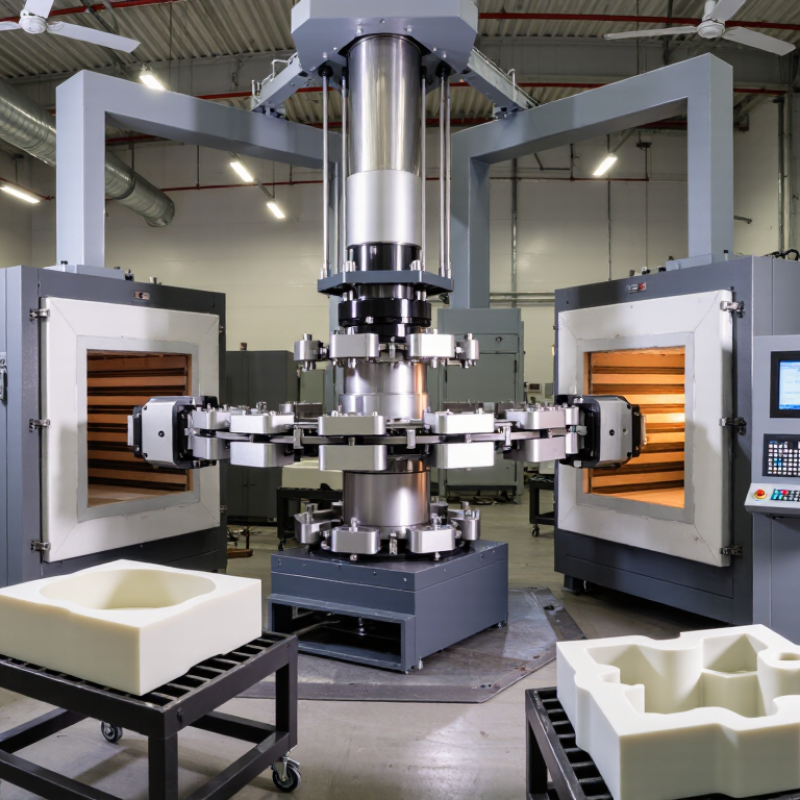
A shuttle rotational molding machine uses a movable carriage to transfer molds between heating and cooling stations. The mold rotates on two axes while polymer powder melts against its inner walls. The mold rotates continuously. This process creates hollow parts without internal welds or high injection pressure. Operators commonly use polyethylene, but material selection depends on impact, temperature, and chemical requirements.
A 2026 machine design should emphasize stable motion, accurate temperature control, and accessible maintenance points. Typical specifications may include independent speed control for both axes, programmable heating zones, and servo-driven rotation. Useful systems often support molds from several hundred kilograms to multiple tons.
Carriage travel, oven size, and cooling capacity must match the largest planned product. Oversizing everything can waste energy. That assumption fails.
In practical production, cycle consistency matters more than impressive maximum speed. Operators should record mold temperature, oven time, rotation speed, and cooling airflow for every trial. Thermocouples and infrared checks can reveal uneven wall thickness, especially near corners and deep ribs. Small details matter.
A well-designed shuttle frame should limit vibration during acceleration and provide clear access around hot molds. Safety guarding, emergency stops, ventilation, and documented operating procedures remain essential parts of the specification. Some published performance figures look attractive, but real output depends on mold design, powder quality, loading accuracy, and operator experience. Testing with the intended mold is still the most reliable comparison.
A shuttle rotational molding machine moves the mold between an oven and cooling station. Its performance depends on controlled heat transfer, not only maximum temperature. Many systems operate within a 200–400°C oven range, but the correct setting depends on the polymer, mold thickness, and loading pattern. A higher setpoint does not always shorten production time. It may create surface bubbles, internal degradation, or uneven wall thickness.
Track the mold’s internal air temperature during every cycle. The oven may read 300°C while the resin core remains much cooler. Heating usually ends near the material’s target peak internal air temperature, then cooling begins with controlled airflow or water mist. Record heating time, cooling time, mold temperature at demolding, and total cycle duration. These figures reveal process drift better than oven temperature alone.
Small details matter.
A heavy steel mold can need several minutes longer than a thin aluminum mold. Cooling too aggressively may warp the part, especially around corners and inserts. In practical trials, a 25-minute cycle can become 32 minutes after adding mold loading and inspection time. That difference affects real output. I have also seen teams trust one temperature sensor too much; sensor placement can hide cold zones. A reliable setup uses repeated trials, documented measurements, and visual checks for distortion, voids, and incomplete fusion. Some process assumptions will be wrong. That is normal, but they should be corrected with data.
Choosing the best shuttle rotational molding machine for 2026 starts with usable mold size. Grand View Research estimated the global rotational molding market above USD 6 billion in 2023. That growth increases pressure on flexible, high-output equipment. Measure the complete mold envelope, not only its diameter. Leave clearance for loading, heating, cooling, and operator access. A larger arm may accept bigger molds, but it can also increase oven space and energy demand.
Arm capacity needs careful checking. Ask for the maximum mold weight, arm reach, and permitted load moment. These figures are different. A 2024 technical guide from the Association of Rotational Molders stresses balanced loading and correct mold placement. An arm rated for 500 kilograms may not safely handle that weight far from its rotation axis. That detail is easy to miss. I would request test data using a mold similar to yours, not a perfect showroom example.
Production rate depends on complete cycle time. Track loading, heating, rotation, cooling, unloading, and mold changeover separately. A machine completing four cycles per hour may produce fewer parts than expected if each arm carries only one mold. Industry capacity reports commonly use annual output assumptions, yet those assumptions often ignore downtime and seasonal maintenance. Build a comparison sheet with cycle minutes, arms, mold positions, and actual reject rates. Then compare output under your own resin, wall thickness, and mold weight. The spreadsheet may look less impressive. That is usually more useful.
A shuttle rotational molding machine should be judged by measured output, not brochure capacity. In 2026, cycle time, energy, scrap, and wall control deserve equal attention. Record ten consecutive cycles with the same mold, resin, load, and cooling conditions. Short tests can mislead. Cycle time runs from mold closing to product release. Separate heating, rotation, cooling, and unloading times. Our early trials ignored operator handling, so the reported rate looked unrealistically high.
Measure energy at the machine input, not only from the control panel. Divide total kilowatt-hours by the kilograms of acceptable products. Include startup energy when assessing a full shift. This reveals hidden losses during warm-up and idle periods. Scrap rate equals rejected kilograms divided by total processed kilograms. Inspect burn marks, pinholes, incomplete corners, and poor inserts. A low scrap rate with slow cycles may still produce the higher daily output.
Wall control needs physical evidence. Measure thickness at a marked grid across flat panels, corners, ribs, and the parting line. Compare readings against the drawing tolerance, then calculate the range and average. Uneven rotation, incorrect powder loading, or unstable mold temperature can create thin spots. Repeat tests on different shifts and verify weighing scales and power meters. We once blamed rotation speed for variation, but the mold temperature sensor was drifting. That mistake changed our testing procedure.
What Is the Best Shuttle Rotational Molding Machine 2026?
Selecting the best shuttle rotational molding machine requires more than comparing oven size and purchase price. ASTM D638 tensile testing and ASTM D790 flexural testing can reveal whether molded parts meet functional expectations. Produce test plaques using the intended polymer, wall thickness, heating cycle, and cooling method. Then compare strength, elongation, stiffness, and visible defects.
Consistency matters most.
A reliable machine should control oven temperature, mold rotation, cooling airflow, and cycle timing with recorded data. Ask for repeatability results from several production cycles, not one attractive sample. Safety also deserves practical inspection. Look for guarded moving areas, door interlocks, emergency stops, thermal alarms, electrical protection, and clear lockout procedures. Ventilation should manage process fumes without creating unsafe airflow near operators.
ROI calculations should include energy consumption, labor, mold changes, maintenance, scrap, and expected annual output. A faster cycle may reduce cost, but excessive heat can increase degradation and rejected parts. Review utility readings from comparable cycles. A spreadsheet can still mislead when downtime is ignored. Include realistic maintenance delays and training time. Request service documentation, spare-parts availability, and operator instructions before approval. If the supplier cannot explain how process data supports ASTM test results, pause the decision. The best machine is not always the largest or fastest; it is the one that delivers stable parts, measurable safety, and defensible operating costs.
Measure the complete mold envelope. Include loading space, heating clearance, cooling access, and operator movement.
No. Mold height, width, clamps, handles, and service clearance also matter. A wide mold may still fail because of limited height.
Check maximum mold weight, arm reach, and permitted load moment. These are different measurements.
The load may sit far from the rotation axis. Distance increases stress, even when total weight seems acceptable.
Request data using a similar mold, resin, weight, and shape. A showroom test may look better than normal production.
Record loading, heating, rotation, cooling, unloading, and mold changes separately. Use complete cycle time, not heating time alone.
No. Arm count, mold positions, downtime, changeovers, and rejected parts can reduce daily production.
Measure machine input energy. Divide total kilowatt-hours by kilograms of acceptable products.
Scrap rate shows rejected kilograms against total processed kilograms. Inspect burn marks, pinholes, incomplete corners, and poor inserts.
Mark a grid across panels, corners, ribs, and parting lines. Compare readings with drawing tolerances.
Uneven rotation, incorrect powder loading, and unstable mold temperature can create thin areas. Sensor drift can confuse the diagnosis.
Record ten consecutive cycles with identical conditions. Short tests may hide warm-up losses, operator delays, and changing mold temperatures.
A Shuttle Rotational Molding Machine is designed for efficient, flexible production of hollow plastic parts through controlled heating, rotation, cooling, and demolding. This article explains how shuttle systems move molds between workstations, how oven temperatures typically range from 200°C to 400°C, and how heating and cooling efficiency affect cycle time, energy use, and overall productivity. It also introduces key design factors, including mold dimensions, arm capacity, workstation layout, and production-rate requirements.
To select the best machine in 2026, manufacturers should compare cycle time, energy consumed per kilogram, scrap levels, and wall-thickness control. The evaluation should also consider material testing requirements such as ASTM D638 for tensile properties and ASTM D790 for flexural performance. Safety features, automation, maintenance access, operator protection, and return on investment are equally important. By balancing production goals, part quality, operating costs, and long-term reliability, buyers can choose a Shuttle Rotational Molding Machine that supports consistent and efficient manufacturing.

