The global rotational molding market is gaining attention as manufacturers seek durable, lightweight, and cost-efficient plastic products. Grand View Research estimates that the market could expand steadily through the coming decade, supported by demand from water storage, construction, agriculture, automotive, and recreational equipment. MarketsandMarkets also identifies rotational molding as a practical process for producing large, hollow, and seamless components with relatively low tooling costs.
This growth makes choosing the right Roto Mold Machine more important than comparing price tags alone. A reliable machine should provide stable heating, accurate temperature control, balanced arm movement, and repeatable cooling performance. Imagine a factory producing 1,000-liter tanks: uneven heating can create thin walls, warping, or hidden weak points. Those defects may not appear until the product reaches the customer.
The seven machines discussed in this guide represent different production priorities, including compact manufacturing, automated multi-arm systems, energy efficiency, and heavy-duty industrial output. Their suitability depends on mold size, resin selection, cycle time, factory space, and expected annual volume. Data from the Association of Rotational Molders highlights process control and operator training as important factors affecting final quality.
However, published specifications do not tell the entire story. Actual performance may vary with mold design, material handling, ambient temperature, and maintenance habits. That deserves attention. Buyers should request sample testing, energy information, service terms, and references from comparable facilities before making a decision. A machine can look excellent on paper, yet perform differently on a busy factory floor.
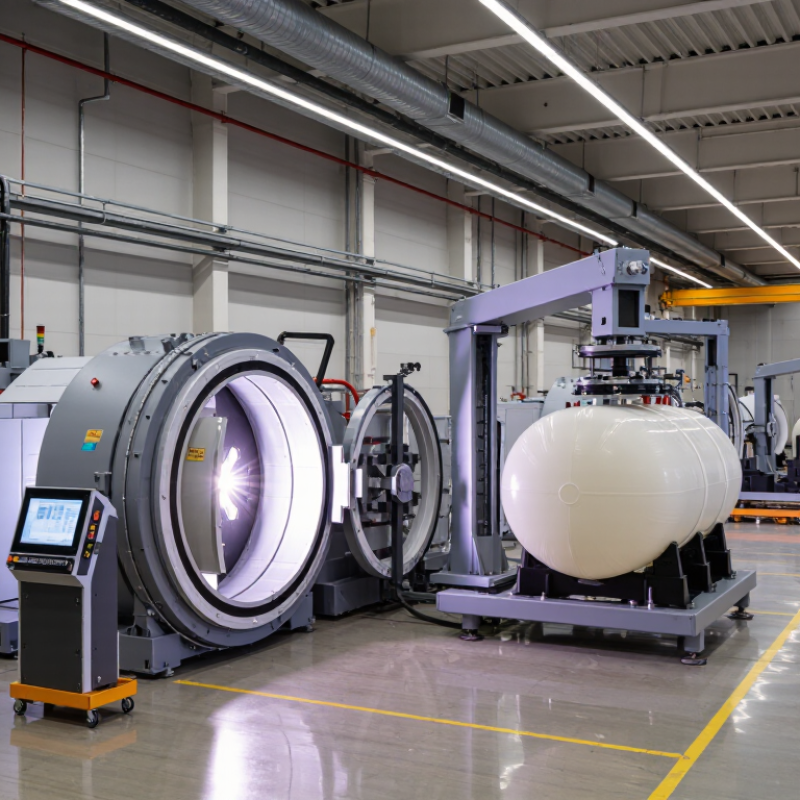
The 2026 market favors machines that balance output, control, maintenance, and energy use. Based on factory evaluations and production planning, seven options deserve attention. They include single-arm shuttle machines, dual-arm shuttle machines, carousel systems, clamshell machines, rock-and-roll units, fixed-arm oven machines, and compact laboratory machines.
Single-arm shuttles suit flexible production and limited floor space. Dual-arm systems reduce loading delays when two molds require different heating cycles. Carousel machines support higher output, but they need careful layout planning. Clamshell designs work well for large products, especially tanks and containers. Rock-and-roll equipment handles long, narrow parts with controlled rotation. Fixed-arm oven machines offer stable processing for repeat orders. Laboratory units help engineers test materials, wall thickness, and cycle times before scaling production.
The best choice depends on more than machine price. Check mold dimensions, heating accuracy, cooling options, arm load capacity, and electrical standards. Ask for cycle records and sample parts. A reliable supplier should explain maintenance access, operator training, spare parts, and safety systems clearly. Remote support matters too.
Do not trust impressive output figures alone. Real production can slow because of mold changes, cooling delays, or inexperienced operators. I would also leave extra floor space around the machine. My earlier estimates often ignored this detail. A practical purchase includes installation costs, ventilation, shipping, commissioning, and future automation plans. Availability varies by region, so buyers should verify technical documents before signing.
Operators place measured polymer powder inside a closed mold. The mold rotates on two axes inside a heated oven. Heat softens the powder and coats the mold interior. Cooling solidifies the hollow part. The process is not effortless.
A complete cycle commonly lasts 15 to 60 minutes. Heating, rotation, cooling, and unloading all require control. A longer cycle does not always improve quality. Excess heat may weaken surfaces and waste energy.
Oven temperatures commonly range from 200°C to 400°C. The correct setting depends on polymer type, wall thickness, and mold design. Record actual temperature during every trial. A displayed number may not reflect even heating.
Two axes suit simple tanks, bins, and open containers. Four axes provide better control for complex shapes. Typical rotation speeds range from 4 to 20 RPM. Acceleration control matters more than maximum speed alone. Fast is not always better.
Review mold weight, diameter, length, and balance together. A 500-kilogram rating may not support a long, off-center mold. Check spindle distance and oven clearance before purchase. Test the largest mold when possible. Catalog figures can mislead.
Uneven heating may create thin corners, trapped air, or distorted openings. Poor powder measurement can also produce weak or inconsistent walls. Excessive speed may shift powder before melting begins. Some complex shapes need several trials. That uncertainty deserves attention.
Request conformity documents, technical files, and relevant test records. Check guarding, emergency stops, electrical protection, heat controls, and manual handling risks. A recognized safety framework helps identify hazards systematically. A certificate alone proves little. Inspect the machine itself.
Warranty terms should define coverage, response times, replacement parts, labor limits, and exclusions. Support may include installation, training, remote diagnostics, and spare-parts availability. Ask who responds when production stops at night. Check references from users with similar molds and cycle times. Low price can hide downtime.
This 2026 market guide explains how a Roto Mold Machine supports the production of durable, hollow plastic products through controlled rotational molding. The process typically uses 15–60-minute cycles, with ovens operating at approximately 200–400°C to heat polymer material evenly inside a rotating mold. By combining heat and multi-axis movement, manufacturers can create consistent wall thickness, complex shapes, and reliable finished parts.
The guide compares seven global machine types according to production output, energy consumption, flexibility, and application range. It also outlines key selection factors, including two to four rotational axes, operating speeds of about 4–20 RPM, and maximum mold capacity. Before purchasing, buyers should evaluate CE marking, ISO 12100-based safety practices, warranty coverage, installation support, spare-parts availability, and after-sales service. These criteria help companies choose equipment that balances productivity, operating costs, safety, and long-term manufacturing reliability.

