Choosing the right Plastic Rotational Mould begins with the part, not the catalogue. A hollow kayak hull, a chemical-storage tank, and a playground tunnel place different demands on wall thickness, surface finish, cycle time, and tool life. Buyers should compare aluminium and steel moulds against expected production volume, part size, cooling needs, and maintenance capacity. A low purchase price can look attractive. It may not remain so after repeated repairs or slow cycles.
Industry reports can help frame the market, but they cannot replace a mould-specific review. Grand View Research’s rotational moulding market coverage examines industry size, growth, and application trends; buyers should consult the latest edition for current figures and stated assumptions. For manufacturing decisions, ASTM D2990 provides test methods for creep and creep-rupture behavior of plastics, while material suppliers’ technical data sheets help assess resin performance. Neither source alone predicts how a finished part will behave in service. That gap matters.
A credible expert quotation also needs a traceable source. No article, interview, or verified quotation was supplied for this request, so attributing a statement to a named specialist would risk inventing evidence. Before publication, add a direct comment from a rotational-moulding engineer and confirm the wording with its original source. This guide compares common mould types and explains where each may fit. The best choice is not always obvious. A short production run, for example, can make a simpler tool more practical—even when a premium mould promises a better finish.
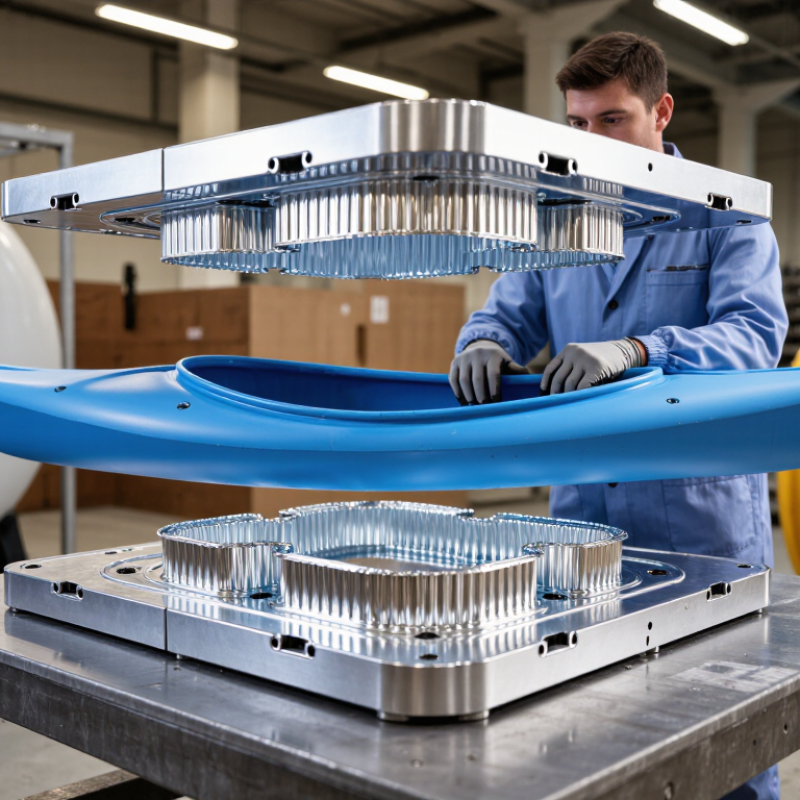
Rotational Moulding Basics: Typical Wall Thicknesses Range from 3–6 mm
2026 Best Plastic Rotational Mould Types for Buyers
Rotational moulding creates hollow plastic parts by heating and rotating a mould around two axes. For many tanks, bins, playground components, and equipment covers, a typical wall thickness ranges from 3–6 mm. This range offers a practical balance between strength, weight, cooling time, and material cost.
Mould selection affects thickness consistency. Clamshell moulds suit simpler shapes and moderate production volumes. Fabricated steel moulds can support large parts and custom details. Aluminium moulds often transfer heat efficiently, helping maintain more even walls. However, no mould type guarantees perfect results. Corners, ribs, inserts, and deep cavities may create thinner or thicker areas. Experienced buyers should request thickness mapping from trial samples, not rely only on design drawings.
Tips: Ask for a wall-thickness report, impact testing, and dimensional checks at room temperature. Confirm the polymer grade and expected service temperature. A 3 mm wall may work for a sheltered container but fail under repeated impact. A 6 mm wall may improve durability, yet increase cycle time and distortion risk. Inspect the part near handles, corners, and the mould parting line. Small flaws there can become expensive problems later. Be open to revising the design; the first specification is rarely perfect.
Cast Aluminium Moulds: High Thermal Conductivity of About 150–205 W/m·K
Cast aluminium moulds remain a practical choice for rotational moulding buyers who need faster, more even heat transfer. Their thermal conductivity typically falls between 150 and 205 W/m·K, depending on alloy, casting quality, and test conditions. This performance helps heat reach the mould surface quickly, reducing cold spots during powder melting.
In production, that difference is visible. A mould can warm more evenly around corners, ribs, and shallow recesses. Cycle times may become more predictable. However, conductivity alone does not determine output. Wall thickness, oven airflow, mould geometry, and release treatment also affect heating behavior. The quoted range is a useful reference, not a guarantee.
A well-cast aluminium mould can provide clean surface detail and reliable dimensional control. It also supports repeated heating and cooling when the casting is properly designed. Buyers should inspect vent locations, flange alignment, surface finish, and evidence of porosity. Small defects can become expensive after many cycles. Ask for alloy information, conductivity test conditions, and sample inspection records. Do not rely on a catalogue number alone. In my experience, rapid heating is valuable, but excessive heat can expose weak corners or uneven wall sections. That trade-off deserves a real trial. Measure mould temperature at several points, not just near the oven sensor. Practical data often challenges the original specification.
Fabricated Steel Moulds: Lower-Cost Tooling for Large, Simple Parts
Fabricated steel moulds can be a practical choice for large, simple rotationally moulded parts. They are built from formed and welded steel sheets, rather than machined from a solid block. That construction can reduce tooling costs when a part has broad, uncomplicated surfaces. Think of a large storage tank with a steady wall thickness and few tight contours. Steel also handles repeated heating and cooling, though the mould still needs careful design to limit distortion.
The trade-off is detail. Welds and seams may leave marks on the mould surface, and complex ribs or sharp features can be harder to produce consistently. A fabricated mould may also need more finishing work before it delivers the desired surface quality. In practice, buyers should review the part’s geometry, expected production volume, and acceptable cosmetic finish with a tooling engineer. Cost matters, but so does how easily the mould can be repaired or modified. I have seen simple designs become less simple after small changes. That deserves a second look.
Tips: Ask for a drawing review before approving the tooling. Confirm how seams, vents, and parting lines will appear on the finished product. Request a sample or surface-finish criteria where appearance is important. Compare the quoted mould price with anticipated maintenance and production needs, not just the initial purchase cost.
2026 Best Plastic Rotational Mould Types for Buyers — Fabricated Steel Moulds: Lower-Cost Tooling for Large, Simple Parts
| Mould type |
Typical construction |
Best suited to |
Relative tooling cost |
Design and production considerations |
| Fabricated steel |
Formed or cut steel sheet and plate assembled by welding; seams and the parting line are finished to suit the application. |
Large, relatively simple hollow parts, such as tanks, bins, covers, and enclosures. |
Often lower for large, uncomplicated shapes than a fully machined mould; actual cost depends on size, detail, and fabrication work. |
Can be practical for broad surfaces and straightforward geometry. Welded seams, corners, and surface finish require careful detailing; intricate contours can increase fabrication and finishing effort. |
| Cast aluminum |
Aluminum cast into a mould shell or tool section, then finished and assembled. |
Parts with more complex contours, formed details, or surface features than a simple fabricated shell can readily provide. |
Varies with tool size, casting method, pattern requirements, and finishing; generally requires more upfront process steps than basic sheet fabrication. |
Supports shaped surfaces and detailed features. Casting quality, dimensional requirements, and finishing should be reviewed with the toolmaker. |
| CNC-machined aluminum |
Aluminum plate, billet, or sections machined to the required cavity shape and assembled where needed. |
Tools needing accurately machined details, repeatable geometry, or a controlled cavity finish. |
Can be higher for large or complex cavities because machining time and material use can be substantial. |
Offers precise, accessible machined features. Deep or complex geometry may require multiple setups, tool access planning, or assembled sections. |
| Hybrid steel-and-aluminum |
A fabricated steel structure combined with aluminum sections or inserts where specific details are needed. |
Large tools that need a robust frame plus selected formed or machined cavity details. |
Project-specific; may limit extensive machining but adds design, joining, and assembly work. |
Material interfaces, thermal behavior, and assembly tolerances need consideration in the tool design. |
Cost and suitability are relative, not quotations. Final tooling choice depends on part geometry, dimensions, surface requirements, production volume, and the mould maker’s process.
CNC Aluminium and Nickel Moulds: Precision Options for Complex Geometries
CNC aluminium and nickel moulds offer buyers two distinct routes to precise rotational moulding. CNC-machined aluminium can hold detailed features, clean parting lines, and carefully placed vent holes. Its heat transfer is generally efficient, which can support consistent heating and cooling. That matters around deep ribs, narrow channels, and corners where uneven temperatures may affect wall thickness. Ask for machining tolerances and surface-finish details, not just a polished sample. The sample may hide a difficult seam.
Nickel moulds are often made through electroforming, allowing thin, detailed shells to reproduce complex surfaces. They can suit intricate textures or geometries that are awkward to machine directly. Their performance depends on shell construction, support, and the moulding cycle; nickel is not automatically the better choice. Check how the tool will be mounted and reinforced. Small details matter.
For a buyer, compare the part design, expected output, repair needs, and budget before choosing either material. A CNC aluminium tool may be easier to modify when a design changes, while a nickel shell may make sense for specific fine-detail requirements. Discuss draft, wall transitions, cooling access, and vent placement with the mould maker using the actual part file. I have seen buyers focus too much on surface appearance. It is an understandable mistake, but fit and repeatability deserve equal attention.
Conclusion
Choosing the right Plastic Rotational Mould is essential for achieving consistent quality, manageable production costs, and efficient manufacturing. Rotational moulding commonly produces parts with wall thicknesses of approximately 3–6 mm, making the process suitable for many hollow and durable plastic products. Cast aluminium moulds are valued for their excellent thermal conductivity, typically around 150–205 W/m·K, which can support more even heating and cooling during production.
For large, simple components, fabricated steel moulds offer a practical, lower-cost tooling solution. When a design includes complex geometries, tighter details, or higher precision requirements, CNC-machined aluminium and nickel moulds may provide better performance. Buyers should compare tooling investment, expected part size, design complexity, mould durability, and production requirements before making a decision. Since rotational moulding cycles often last about 20–60 minutes, selecting a mould that balances heat transfer, accuracy, service life, and total operating cost can significantly influence long-term manufacturing efficiency.

